

Sage green has moved beyond a short-lived trend and become a popular choice for kitchen design. Sitting comfortably between soft gray and muted olive, sage acts as an earthy neutral that brings quiet life to a space without feeling loud or overwhelming.
Green continues to be a popular direction in kitchen design, and sage is especially appealing because its muted tone works well with a wide range of materials and styles. Whether you are replacing old cabinet doors, upgrading to ready-to-assemble boxes, or planning a full gut remodel, exploring sage green kitchen cabinets ideas gives you a versatile foundation that fits right in with broader 2026 kitchen cabinet color trends across modern, farmhouse, and transitional styles.
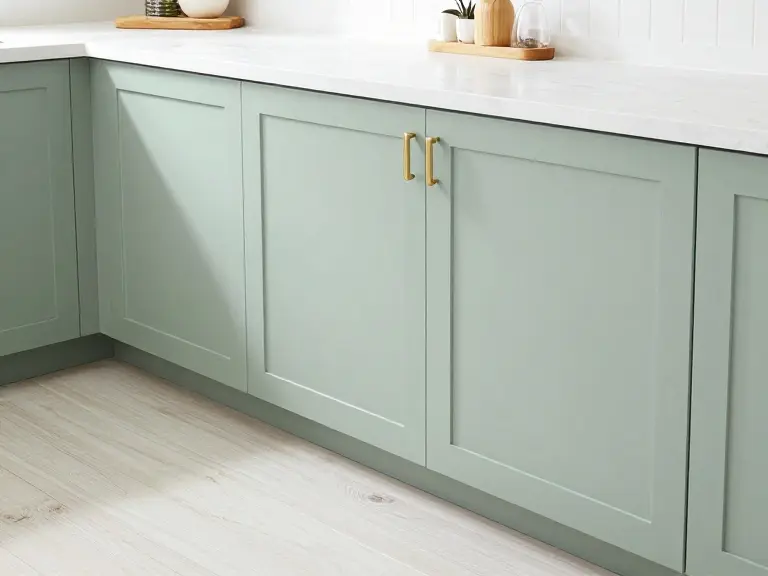
How to Choose Between Light and Dark Sage Green
Not all green paints read the same way once applied. Green shades shift based on gray, brown, or blue undertones, so picking the right depth comes down to room size, lighting conditions, and the visual weight you want to create.
Light sage and dark sage serve completely different design goals:
-
Light Sage Green: Shades in this family carry heavy gray undertones, making them feel airy and soft. They work exceptionally well in compact kitchens, galley layouts, or spaces with limited windows because they reflect natural light rather than absorbing it. Popular shades such as Sherwin-Williams Sea Salt and Benjamin Moore Saybrook Sage can create a similar soft, muted look. If you want to keep your footprint bright while staying aligned with broader kitchen cabinet color trends, light sage offers a low-risk starting point.
-
Dark or Deep Sage Green: Deeper variations lean closer to muted moss or dark olive. These richer tones bring structural weight and quiet elegance to a room. They are especially popular when used as a focused accent on a central island or lower base cabinets, creating a grounded anchor without darkening the entire space.
If you are unsure which shade works best, order a sample door first. Paint colors can look noticeably different in natural daylight and under warm evening lighting.
Which Countertops and Hardware Work Best
Because sage green functions as an organic backdrop, the surrounding materials dictate the overall personality of your kitchen.
Countertop Pairings
-
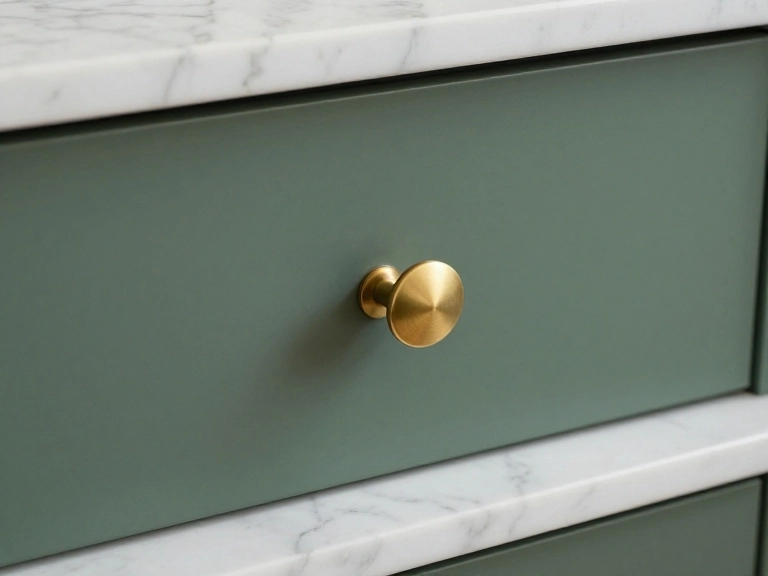
White Quartz and Light Marble: Clean white quartz with subtle gold or gray veining provides a crisp break against soft green doors. It keeps the palette looking tailored and fresh.
-
Veined Quartzite: Natural quartzite offers movement and durability. It pairs especially well with darker green shades where you want high contrast without flat artificial surfaces.
-
Butcher Block and Natural Wood: Pairing sage cabinets with butcher block, white oak, or walnut adds warmth and texture, making the kitchen feel more natural and inviting.
Hardware Pairings
-
Brushed Gold and Warm Brass: Warm brass and gold finishes complement sage particularly well and add warmth to the cabinetry.
-
Matte Black: For a sharper, modern edge, matte black pulls outline cabinet lines and give traditional shaker doors a clean profile.
Smart Ways to Style a Two-Tone Kitchen Layout
If you love green but hesitate to commit to full floor-to-ceiling color, a two-tone layout solves the problem gracefully. Placing dark or mid-tone sage on lower base cabinets while keeping upper cabinets bright white or cream maintains visual balance.
For smaller kitchens, sage green lower cabinets with white or cream upper cabinets can add personality while keeping the upper half of the room visually light.
This setup mirrors the practical design approach seen in blue-grey two-tone cabinets, where dark lower units handle daily wear and tear while light upper cabinets keep eye level open and bright.
This combination keeps the lower part of the kitchen grounded while the lighter upper cabinets help the room feel more open.
Using dark sage on the island is another effective way to create a focal point without covering every cabinet in green.

Matching Sage Cabinets to Your Specific Kitchen Style
Sage green adapts easily across different structural layouts, but adjusting your accents helps tie the room together.
-
Modern Kitchens: Keep lines simple and palettes restrained. Pair cool-toned sage cabinets with flat-panel doors, quartz countertops, and a single metal finish to avoid visual clutter.
-
Farmhouse Kitchens: Pair warm sage tones with open wood shelving, apron-front ceramic sinks, and classic brass knobs. The organic feel of sage naturally supports natural wood and exposed grain.
-
Transitional Kitchens: Use shaker doors with simple hardware. Sage green acts as a bridge in transitional spaces, blending traditional door profiles with modern countertop materials effortlessly.
Wall Paint and Tile Combinations
Selecting wall paint and tile around sage cabinetry requires keeping neighboring surfaces simple so colors do not clash.
Warm off-whites, soft cream, and gentle beige tones work well alongside sage cabinetry. Sherwin-Williams Alabaster is another warm off-white option that pairs well with sage green. Pure stark white paint can feel too surgical against muted green tones, whereas warm whites allow the green to feel rich and intentional. Complementary wall shades like Sherwin-Williams Evergreen Fog or Benjamin Moore October Mist can also work if you prefer a subtle tone-on-tone feel.
For backsplashes, classic white subway tile, hand-made Zellige tiles with gentle glaze variations, or full-slab quartz backsplashes keep visual clutter low. If you prefer texture over heavy patterns, running natural wood open shelves across a plain tiled wall breaks up continuous cabinet runs while offering practical storage.

Planning Your Renovation Steps
Before locking in your cabinet order or buying gallons of paint, take time to verify how the finish looks in your actual room footprint.
-
Test Physical Samples: Never order full cabinet packages based on a phone or laptop screen. Place physical door samples against your existing flooring and countertops to confirm how the finish reacts to your room’s natural lighting. Check the sample in both natural daylight and your evening lighting, because sage can appear warmer, cooler, or darker depending on the surrounding light.
-
Review Layout Options: If you are changing your layout or removing upper cabinets to add open shelving, request a 3D design layout first. Seeing the spatial balance beforehand confirms whether a two-tone design or full-coverage sage fits your space best.
-
Evaluate Refacing vs Replacement: If your existing cabinet boxes are structurally sound, repainting existing doors or choosing cabinet refacing in a high-durability satin finish delivers the visual upgrade of a full remodel for a fraction of the cost.
Frequently Asked Questions
Are sage green kitchen cabinets still popular?
Yes. Sage green remains a popular kitchen cabinet choice because its muted green tone works well with modern, farmhouse, and transitional design styles.
Are sage green kitchen cabinets timeless?
Yes, sage green kitchen cabinets are considered a timeless choice in modern interior design. Because sage acts as a soft, earthy neutral rather than a bright accent color, it avoids feeling dated over time and pairs effortlessly with shifting countertop and hardware trends.
Is sage green a good color for kitchen cabinets?
Yes, sage green is an excellent color for kitchen cabinets because it brings natural warmth, reduces visual stress, and bridges the gap between traditional and modern styles. Its muted undertones make it versatile enough to work in both large sunlit spaces and small compact kitchens.
Where to buy sage green kitchen cabinets?
You can buy sage green kitchen cabinets through major home improvement stores, specialized online RTA (ready-to-assemble) cabinet outlets, or custom cabinetry makers. If you are on a budget, ordering unpainted shaker doors or choosing cabinet refacing with a factory-applied sage finish is also a popular route.
What colors go well with sage green kitchen cabinets?
White, cream, natural wood, warm gray, brass, matte black, and soft neutral shades all pair well with sage green cabinets.
Are sage green cabinets good for a small kitchen?
Yes. Light sage is particularly suitable for small kitchens because its soft appearance can keep the room feeling bright and open. Pairing sage lower cabinets with white upper cabinets is another effective option.
What countertop goes best with sage green cabinets?
White quartz, light marble, quartzite, and butcher block are all strong choices. White and light stone create contrast, while natural wood adds warmth.
Should I choose light or dark sage cabinets?
Light sage is generally easier to use in small or low-light kitchens, while dark sage works well as an island or accent color and can create more depth in larger spaces.

