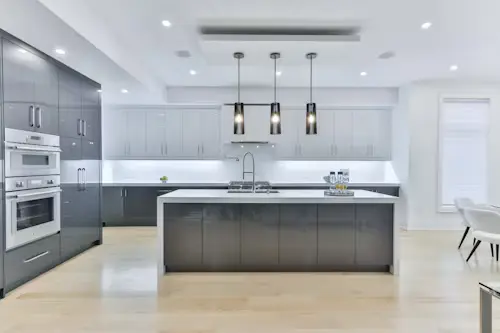
Warm Neutrals Are the New Baseline
Soft Mushroom and Taupe
-
Why it works: It hides minor scuffs and fingerprints far better than stark white.
-
Top Paint Picks: Sherwin-Williams Accessible Beige (SW 7036) or Benjamin Moore Pashmina (AF-100).
Creamy Off Whites
Earthy Greens for Nature Inspired Comfort
| Color Family | Best Kitchen Style | Maintenance Effort | Resale Value Impact |
| Warm Taupe and Mushroom | All Styles | Low | High |
| Sage Green | Craftsman and Farmhouse | Medium | High |
| Moody Navy and Charcoal | Modern and Coastal | High (shows dust) | Medium |
| Natural Wood Stains | Transitional | Very Low | High |
Soft Sage and Olive
Deep Forest and Moss
Contractor Tip on LightingGreen paint pigments are notoriously sensitive to lighting changes. A sage green that looks calm under warm LED lights can look harsh under cool daylight bulbs. Always paint a 2×2 foot sample board and test it in your kitchen at morning, noon, and night before buying gallons.
Deep Moody Shades for Drama with Purpose
-
Charcoal and Soft Black: Instead of pitch black, look for soft charcoal hues with brown or blue undertones. They create a sleek contrast against white backsplash tile.
-
Rich Navy and Indigo: Navy remains a favorite for kitchen islands. It provides a crisp anchor that complements brass and gold hardware.
Rich Wood Stains for Texture Over Paint
-
Warm White Oak: Lightly stained white oak offers a clean Scandinavian feel that resists yellowing over time.
-
Rich Walnut: Walnut delivers instant luxury, working best in spaces with ample natural light or tall ceilings.
How to Mix Two Tone Cabinet Colors Safely
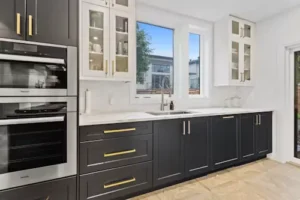
Image Source: Unsplash
If you are torn between a bold shade and a safe neutral, a two-tone kitchen gives you the best of both worlds.
-
Keep Heavy Colors Down Low: Paint your base cabinets or island in a darker tone like forest green or navy, and keep uppers light like cream or off-white. This prevents the room from feeling top-heavy.
-
Unify with Hardware: Use the same cabinet pulls or knobs across both colors to tie the design together visually.
Cost Breakdown of Painting Versus Replacing Cabinets
Before picking a color, make sure your existing cabinets are structurally sound. Painting over rotted wood or warped doors is throwing good money after bad.
| Project Scope | Average US Cost | Expected Lifespan | Best For |
| Professional Painting | $3,000 to $6,500 | 7 to 10 Years | Solid wood doors |
| Cabinet Refacing | $7,000 to $13,000 | 12 to 15 Years | Good box integrity |
| Full Custom Replacement | $15,000 to $35,000+ | 20+ Years | Total layout shift |
Contractor Pitfall on Skipping Prep WorkOver 80% of cabinet paint failures like peeling and chipping around handles happen because of bad surface prep, not bad paint. Kitchen cabinets accumulate grease films from cooking. You must degrease thoroughly, sand the surface, and use a dedicated bonding primer before applying your topcoat.
Practical Next Steps for Your Kitchen Project
Selecting the right hue for your 2026 kitchen cabinet update comes down to how much light your space receives and how long you plan to stay in the home.
If you plan to sell within three years, stick to warm taupes, soft mushrooms, or light oak stains to appeal to the widest pool of buyers. If you are remodeling for yourself, don’t be afraid to add personality on an island or lower cabinet run with deep greens or rich blues.
Start by ordering stick-on paint samples or painting test swatches directly on your cabinet doors. Observe how they look next to your countertops and flooring under both natural sunlight and your overhead fixtures before committing to a final shade.

